English Below-
ขบวนแรงงานรวมพลังเรียกร้องรัฐบาลประยุทธ์แก้ปัญหาแรงงานก่อนถูกตัดสิทธิ์การค้าภายในเดือนเมษายนนี้
เขียนโดย สมยศ พฤกษาเกษมสุข
จากกรณีที่สหรัฐอเมริกาแจ้งต่อประเทศไทยกรณีระงับสิทธิพิเศษทางภาษีศุลกากร (GSP) กับสินค้าจากประเทศไทย โดยจะส่งผลต่อมูลค่าการค้าประมาณ 3 หมื่นล้านบาท หรือราว 1 ใน 3 ของสินค้าที่ได้รับสิทธิ GSP ให้เวลาประเทศไทยแก้ไขปัญหาการละเมิดสิทธิแรงงานตั้งแต่เดือนตุลาคม 2562 จนถึงเมษายน 2563 หากรัฐบาลเพิกเฉยจะส่งผลกระทบให้ผู้ประกอบการผลิตสินค้าส่งไปสหรัฐ ต้องเลิกกิจการหรือลดกำลังการผลิตได้ จะทำให้คนงานตกงานถึง 80000-100,000 คนได้
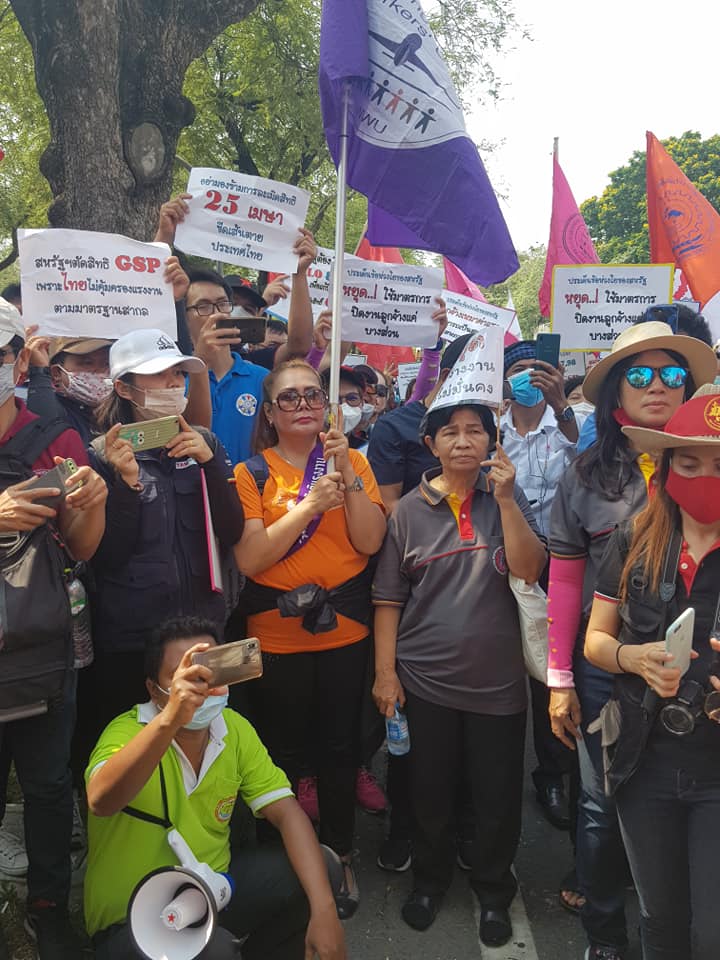
เมื่อวันที่ 3 มีนาคม 2563 เวลา 10.00 น. นางสาวอภันตรี เจริญศักดิ์ รองประธานคณะกรรมการสมานฉันท์แรงงานไทย ฝ่ายสตรีและเยาวชน นำคนงานกว่า 1000 คน มาชุมนุมที่หน้าอาคารสหประชาชาติ ถ. ราชดำเนินนอก ยื่นหนังสือต่อนายกรัฐมนตรีประยุทธ์ จันทร์โอชา ให้แก้ไขปัญหาแรงงานเร่งด่วน เพื่อรักษาสิทธิพิเศษทางภาษีศุลกากรในสหรัฐอเมริกาและในประชาคมยุโรปต่อไป
นางสาวอภันตรี เจริญศักดิ์ ได้เปิดเผยว่า ในเดือนตุลาคม 2562 รัฐบาลสหรัฐได้แจ้งมายังรัฐบาลไทยว่า ประเทศผู้มีสิทธิได้รับ GSP ในกรณีประเทศไทยนั้น ต้องมีการคุ้มครองสิทธิแรงงานตามมาตรฐานสากล เนื่องจากประเทศไทย ยังมีปัญหาการละเมิดสิทธิแรงงาน7 ประการด้วยกันคือ 1. การละเมิดสิทธิการรวมตัวเป็นสหภาพแรงงาน 2. ความอ่อนแอการบังคับใช้กฎหมายแรงงานทั้งการคุ้มครองแรงงานและแรงงานสัมพันธ์ 3. การเอาเปรียบลูกจ้างเหมาค่าแรงและการใช้สัญญาจ้างชั่วคราว 4 ข้อจำกัดการจัดตั้งสหภาพแรงงานในกลุ่มแรงงานต่างด้าว5.การคุ้มครองลูกจ้างระหว่างการจัดตั้งสหภาพแรงงาน 6.การไม่มีหลักสุจริตใจการเจรจาต่อรอง 7.การจำกัดสิทธิการพูด การแสดงความคิดเห็นด้วยการใช้กฎหมายหมิ่นประมาท ทั้งนี้หากรัฐบาลเพิกเฉย ไม่แก้ปัญหาการละเมิดสิทธิแรงงาน จะกลายเป็นเงื่อนไขให้สหรัฐอเมริกาตัดสิทธิพิเศษภาษีศุลกากร(GSP) จำนวน 573 รายการด้วยกันจะส่งผลให้ผู้ประกอบการผลิตสินค้าส่งออกไปสหรัฐอเมริกาได้รับผลกระทบด้วยการลดกำลังการผลิตหรือถึงขั้นปิดกิจการ จะทำให้มีการเลิกจ้างคนงานเพิ่มขึ้นอีกราว 80000-100,000 คน
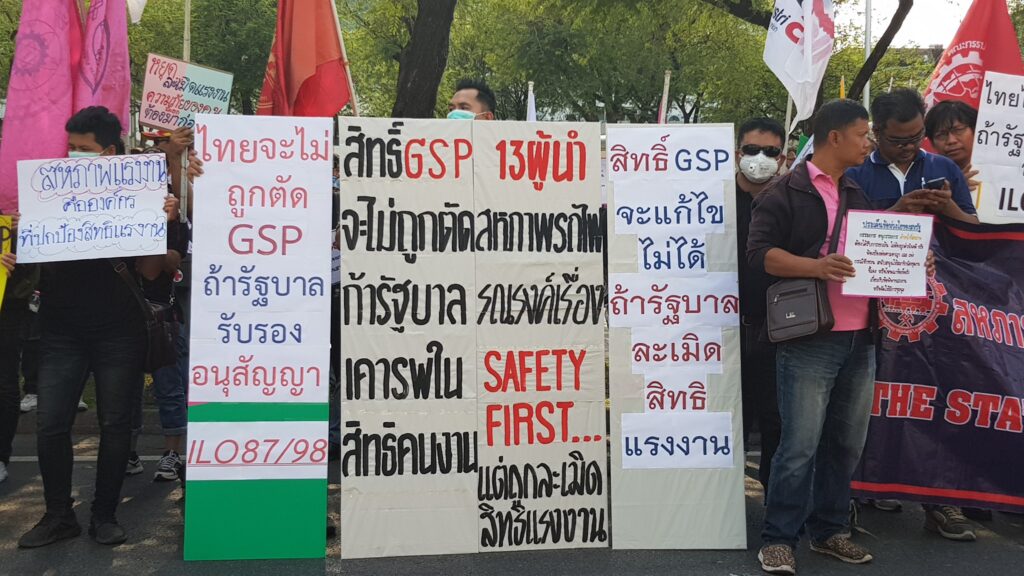
นอกจากนี้ มีความเป็นไปได้อีกด้วยว่า ประชาคมยุโรป (EU) ก็อาจตัดสิทธิพิเศษภาษีศุลกากรเช่นเดียวกับสหรัฐอเมริกาจะทำให้สินคาไทยกว่า 3 พันรายการถูกตัดสิทธิพิเศษทางภาษีศุลกากรไปด้วย ก็จะยิ่งซ้ำเติมสภาพทางเศรษฐกิจไทยให้ย่ำแย่ลงไปอีก การตัดสิทธิพิเศษทางภาษีเช่นนี้ สหรัฐได้เข้ามาสำรวจเก็บข้อมูลไว้อย่างชัดเจนถึงความเป็นจริงที่ประเทศไทยมีการละเมิดสิทธิแรงงาน โดยใช้ข้อมูลจากคดีแรงงานถึง 19 คดีด้วยกันเป็นข้อมูลในการตัดสิทธิพิเศษทางภาษีศุลกากรในครั้งนี้ โดยสหรัฐให้เวลารัฐบาลไทยแก้ไขปัญหาให้ดีขึ้นภายในวันที่ 25 เมษายน 2563นี้
นางสาวอภันตรี เจริญศักดิ์ กล่าวเพิ่มเติมอีกว่า ปัจจุบันประเทศไทยเจอปัญหาทางเศรษฐกิจหลายด้านด้วยกัน หากรัฐบาลไทยแสดงความจริงใจในการแก้ไขปัญหาแรงงาน การคุ้มครองสิทธิเสรีภาพของคนไทยอย่างจริงจัง เช่น การรับรองอนุสัญญาแรงงานระหว่างประเทศว่าด้วยสิทธิการรวมตัวเป็นสหภาพแรงงานและการเจรจาต่อรอง (ILO 87:98) ก็จะทำให้ประเทศไทยยังคงได้รับสิทธิพิเศษทางภาษีศุลกากร ในการช่วยให้ผู้ประกอบการผู้ผลิตสินค้าไปสหรัฐ สามารถขยายการส่งออกต่อไปได้และเป็นการช่วยแก้ปัญหาการว่างงานที่กำลังมีความรุนแรงอยู่ในขณะนี้ อย่างน้อยที่สุดรัฐบาลควรดำเนินการทันทีภายในเดือนเมษายน 2563 นี้ มิเช่นนั้นแล้ว ภาวะทางเศรษฐกิจจะเลวร้ายลงไปอย่างมาก
++++++++++++++++++++++++++++++++++++++++++++++++++++++++++++++++++++++++++++++++++++++++++++++++++++++++++++++++++++++++++++++++++++++++++++++
Workers’ Alliance Urges Prayut Government to Address Labor Issues Before U.S. Suspends Thailand’s GSP – March 3, 2020
Written by Somyot Pruksakasemsuk
In the case where the United States notified Thailand of the suspension of Generalized System of Preferences (GSP) tariff privileges for Thai exports, the impact would amount to roughly 30 billion baht in trade value, or about one-third of all products that currently benefit from GSP. The U.S. gave Thailand from October 2019 until April 2020 to correct ongoing violations of labor rights. Should the government ignore this, it would force exporters producing for the U.S. market to shut down or scale back production, potentially throwing 80,000–100,000 workers out of jobs.
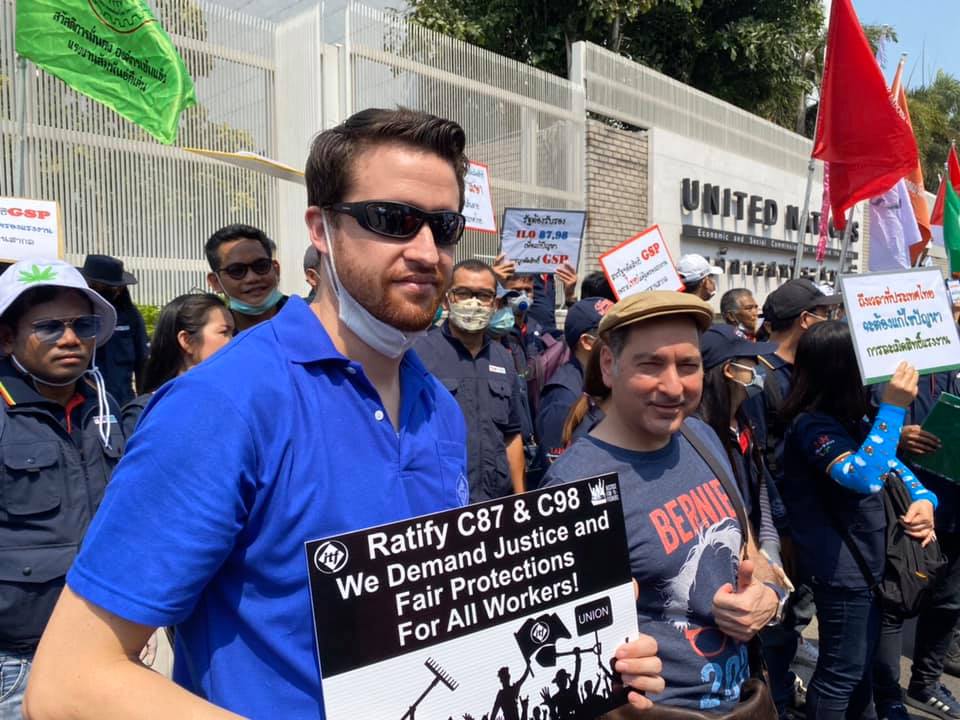
On March 3, 2020 at 10:00 a.m., Ms. Aphantree Charoensak, Vice-President of the Thai Labor Solidarity Committee (TLSC) for Women and Youth, led more than 1,000 workers to rally in front of the United Nations building on Ratchadamnoen Nok Road. They submitted a letter to Prime Minister Prayut Chan-o-cha demanding urgent measures to resolve labor problems in order to preserve tariff privileges under the GSP system with the United States, and likewise within the European Union.
Ms. Aphantree Charoensak explained that in October 2019, the U.S. government formally informed the Thai government that any country wishing to retain GSP status must guarantee labor rights in line with international standards. Thailand, however, continues to face seven major violations of labor rights:
- Violations of the right to organize trade unions.
- Weak enforcement of labor laws, including protections and industrial relations.
- Exploitation through sub-contracted wage employment and short-term contracts.
- Restrictions on union formation among migrant workers.
- Lack of protection for employees during the union-organizing process.
- Absence of good-faith bargaining.
- Curtailment of freedom of expression through the misuse of criminal defamation laws.
If the government refuses to act, this will become grounds for the United States to suspend GSP tariff privileges for 573 product categories. This would impact exporters to the U.S. through downsizing or factory closures, resulting in another wave of layoffs affecting 80,000–100,000 workers.
There is also the strong possibility that the European Union will follow suit by suspending GSP tariff privileges, which would affect more than 3,000 categories of Thai goods. This would further deepen Thailand’s economic crisis. The U.S. decision was based on clear investigations into labor rights violations in Thailand, using evidence from 19 labor cases to justify its move. Washington has given the Thai government until April 25, 2020 to make substantial improvements.
Ms. Aphantree further stated that Thailand is already facing multiple economic crises. If the Thai government shows genuine commitment to resolving labor problems and protecting the rights and freedoms of workers—such as by ratifying the international labor conventions on freedom of association and collective bargaining (ILO Conventions 87 and 98)—Thailand would continue to retain GSP tariff privileges. This would help exporters expand shipments to the U.S. market and prevent mass unemployment, which is already reaching alarming levels. At the very least, the government must act immediately by April 2020. If not, the economic situation will deteriorate severely.